
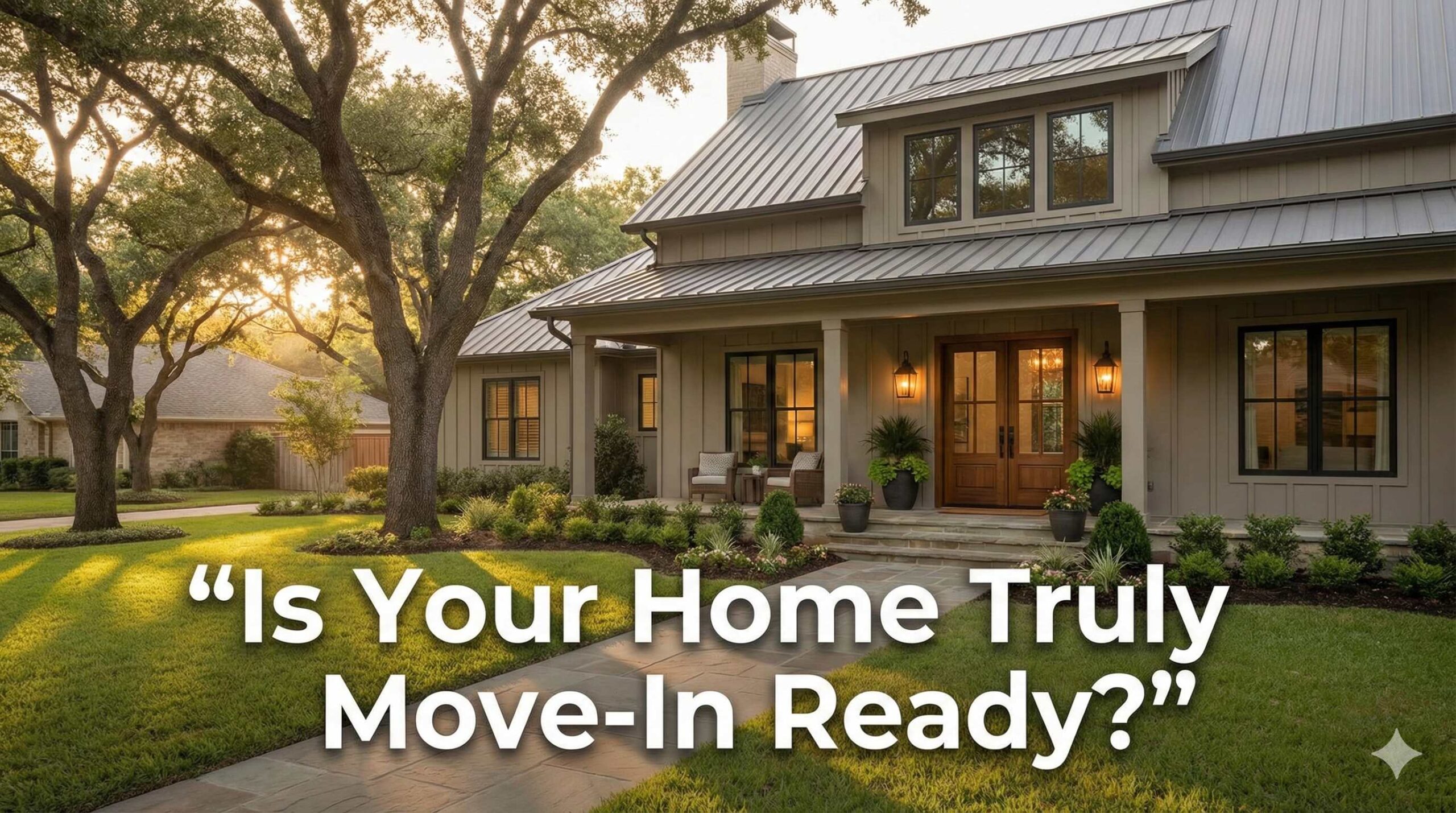
“Move-in ready” used to be a flexible phrase — a home that was clean, functional, and didn’t require major repairs. But in 2026, the meaning has changed. Today’s buyers aren’t just looking for a blank canvas. They’re looking for a home that feels finished, updated, and easy from the moment they walk through the door.
A national survey from 2025 made this shift unmistakable: 56.1% of buyers said a home being move-in ready with no repairs needed was “very important,” and another 37.8% said it was “somewhat important.” In other words, more than nine out of ten buyers are placing real weight on condition, and they’re making decisions quickly based on how a home looks, feels, and functions the moment they preview it online.
In Houston’s balanced market, where inventory is higher and buyers have more choices than they did a few years ago, this expectation shapes the entire selling process. Homes that look turnkey capture attention fast. Homes that look like work often get passed over instantly.
So what does move-in ready actually mean now, and how you can get your home more “move-in ready.”
The Modern Definition of Move-In Ready
Most sellers assume their home is move-in ready because it’s clean, loved, and everything functions as intended. But buyers in 2026 aren’t evaluating homes through a “we can fix that later” lens. They’re evaluating based on total cost of ownership, time, hassle, and long-term maintenance in a world where everything, from insurance to renovation labor, costs more than it did just a few years ago.
Move-in ready today means the home feels updated, neutral, and well-cared-for. It means buyers aren’t mentally tallying projects as they walk through the rooms. It means the home appears structurally sound, cosmetically consistent, and free of obvious issues that might signal deeper concerns.
And more than anything, it means buyers can imagine setting down their boxes and simply living, not repairing, not replacing, not remodeling.
That mindset alone is why move-in readiness has become one of the strongest predictors of how quickly a home sells and how close it comes to asking price.
The Cost of Not Being Move-In Ready
When a home feels dated or in need of repairs, the impact isn’t just aesthetic. It’s financial. Homes that don’t present well tend to sit longer and once a listing crosses the four-week mark without meaningful interest, buyers begin asking a very different set of questions. They wonder what other buyers saw that they didn’t like, whether the price is too high, and whether there’s an issue hidden behind photos that didn’t show the full picture.
Longer days on market almost always lead to lower offers, more negotiation, and in many cases, seller concessions that exceed what the cost of simple improvements would have been. That’s the part most sellers underestimate.
For example: A home that needs $1,500 worth of cosmetic updates often ends up selling for $10,000–$15,000 less than expected because buyers build repair costs, time, and uncertainty into their offer strategy.
There’s also a psychological component that matters more now than ever. Buyers scrolling through listings make snap judgments in seconds. If the home looks dark, dated, cluttered, or worn, they rarely save it and rarely schedule a showing. In a market where buyers have choices, the homes that feel fresh and finished get the first visits, the strongest offers, and the most consistent attention.
In short: the cost of not being move-in ready is almost always higher than the cost of preparing your home well.
The Top Five Areas Buyers Care About Most (And You Should Too)
While every home is different, buyers tend to focus on the same core areas when deciding whether a property feels move-in ready. These areas shape first impressions and dramatically influence interest.
1. The Kitchen
The kitchen sets the emotional tone for the entire home. Buyers pay attention to lighting, hardware, countertops, and whether the space feels bright, updated, and functional. A tired kitchen can overshadow the rest of the home, while even modest updates can dramatically elevate perceived value.
2. The Bathrooms
Bathrooms communicate how well a home has been maintained. Clean grout, functioning ventilation, modern faucets, and the absence of mildew or leaks immediately increase buyer confidence. Conversely, worn finishes or visible water damage often create hesitation that extends well beyond the bathroom itself.
3. Flooring and Walls
Consistency is key. Buyers want neutral paint and flooring that flows room to room without abrupt transitions. Scratched wood, stained carpet, or bold wall colors can be surprisingly costly in buyer perception, because flooring and paint require both money and disruption to replace.
4. Major Systems
Houston buyers care deeply about the age and condition of the roof, AC, HVAC system, and water heater. Rising insurance premiums and higher repair costs have made these big-ticket items a major deciding factor. Even if cosmetics are acceptable, older systems can significantly reduce the number of buyers willing to commit.
5. Curb Appeal and the Entry Experience
Judgments begin before buyers step inside. Clean landscaping, a fresh front door, working exterior lighting, and a tidy walkway all set expectations for what’s to come. If the outside feels neglected, buyers assume the inside will be too, even if that’s not the case.
These five categories shape more than first impressions. They shape whether buyers feel confident, comfortable, and emotionally aligned with the home. And confidence is what drives competitive offers.
Making Your Home Move-In Ready Without Overspending
The encouraging news is that most sellers don’t need a major renovation to meet buyer expectations.
The highest-impact updates are usually simple: a fresh coat of neutral paint, updated light fixtures, new cabinet hardware, pressure washing the exterior, refreshing landscaping, and addressing small repairs that buyers will notice immediately.
These targeted improvements not only elevate the home visually; they signal care. They tell the buyer, “This home has been maintained. This home is ready. You won’t inherit a list of problems.”
And because today’s buyers overwhelmingly value move-in readiness, these modest upgrades often strengthen your position far more than a price reduction would. Sellers who invest in presentation upfront protect their equity, shorten their timeline, and create a smoother selling experience overall.
Final Thought: Move-In Ready Is Really About Buyer Confidence
Move-in ready doesn’t mean perfect. It doesn’t mean trendy. And it certainly doesn’t mean expensive. It means presenting a home that feels cared for, clean, updated where it counts, and free from obvious issues that push buyers toward caution.
More than nine out of ten buyers now prefer homes that are truly turnkey. When sellers understand that expectation, and prepare accordingly, they put themselves in a better position to attract qualified buyers quickly and achieve a stronger final price.
If you’d like help understanding how move-in-ready expectations apply to your specific home, or which improvements will make the greatest impact in your neighborhood, our concierge hotline is available to you anytime at (281) 781-4348 or visit SimienProperties.com.