
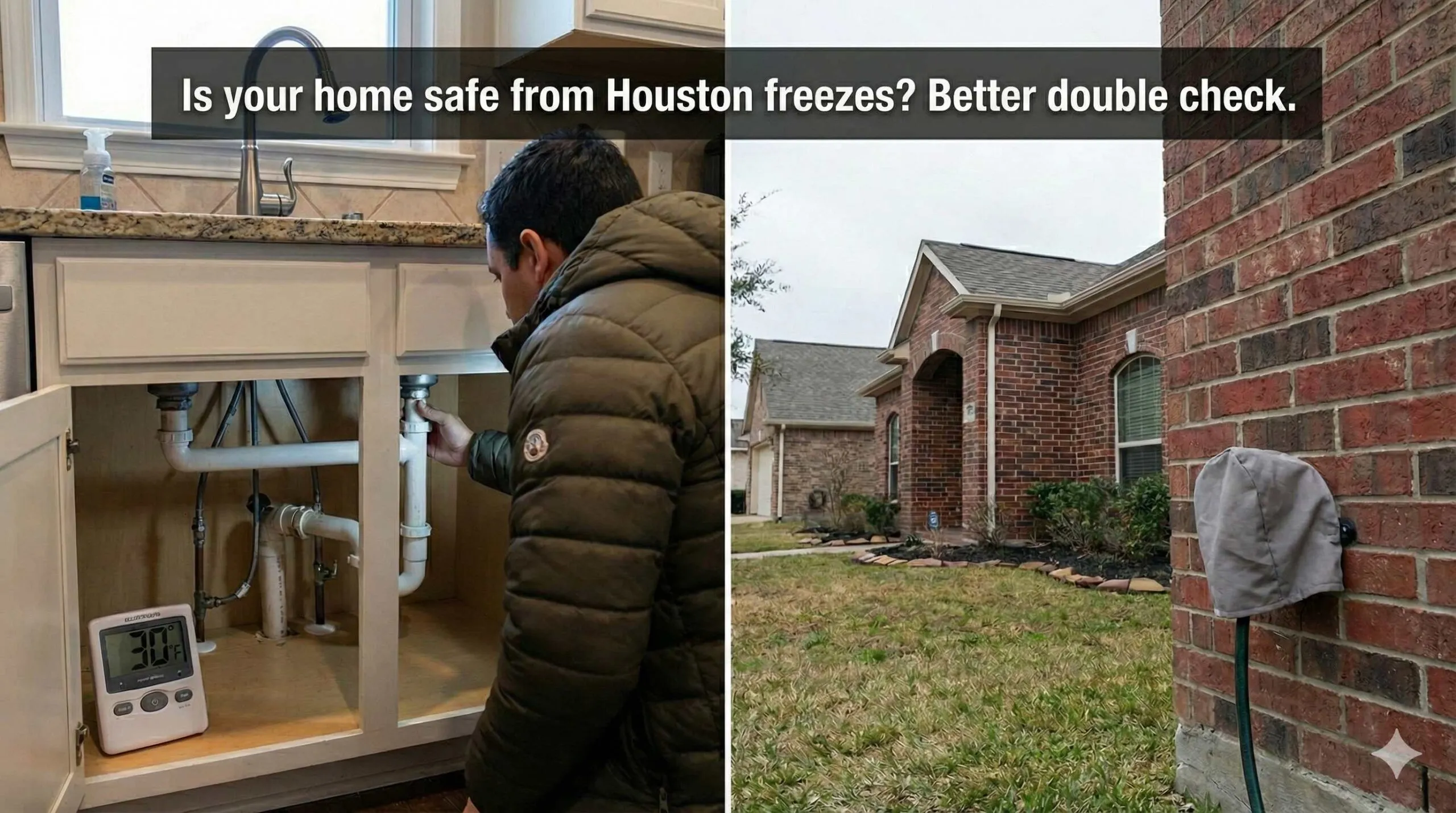
Houston may be hot for most of the year, but when a winter freeze arrives, it hits harder here than in almost any other major U.S. city. Homes in northern climates are built with cold weather in mind. Ours aren’t. And that’s why a night or two in the mid-20s can cause thousands of dollars in damage before you even realize something went wrong.
If you lived through Winter Storm Uri in 2021, or the deep freezes of 2022 and early 2024, you already know how quickly things can escalate: frozen pipes, cracked irrigation systems, burst hose bibs, flooded kitchens, and days-long power outages that left entire households scrambling.
Even now, years later, Houston homeowners still ask the same questions: Why does this happen so easily here? And what can we do to prevent it?
This guide breaks down exactly why freezes cause so many problems in our area, what parts of your home are most vulnerable, and what you can do to protect your home before, during, and after a cold snap.
Why Freezes Cause More Damage in Houston Than People Expect
One of the biggest misconceptions about Houston freezes is that they must be long or severe to do damage. In reality, temperatures only need to dip into the mid-20s for a few hours for pipes to freeze, expand, and eventually burst. That’s because most Houston homes were built with warm weather in mind, not winter.
Many of our plumbing lines run through uninsulated attics, garages, crawl spaces, or along exterior walls, places that get cold very quickly once the temperature drops. Outdoor faucets are also directly connected to interior plumbing, which means a frozen hose bib can turn into a burst pipe inside the wall as soon as things begin to thaw.
Older homes are even more vulnerable. Homes built before the mid-2000s often have more exposed plumbing, thinner insulation, and garage-located water heaters that were never designed for freezing conditions. Irrigation systems and backflow preventers are notorious for cracking as well, causing slow leaks that homeowners sometimes don’t notice until spring.
The result? In our experience helping homeowners through past freezes, a short cold snap can create tens of thousands of dollars in damage in a matter of minutes, not because Houston is uniquely cold, but because we’re uniquely unprepared by design.
The Parts of Your Home Most at Risk
Not every section of your home is equally vulnerable during a freeze. Understanding the weak spots helps you focus on what truly matters.
- Outdoor faucets freeze first and most often. These aren’t just small fixtures; they’re direct access points into your home’s plumbing. When a hose bib freezes, the expansion typically happens inside the wall cavity, which means you won’t see the problem until water starts pouring out hours later.
- Attic plumbing is another known culprit. Attics can drop below freezing quickly, especially during overnight lows. Any supply line that runs near the roof or an exterior wall is at risk.
- Water heaters located in garages also face freeze risk because garage temperatures often match the outdoor air. Even a partially frozen fitting or valve can cause significant damage once thawing begins.
- Laundry rooms that sit on exterior walls, older copper or galvanized pipes, and exposed irrigation systems all make the list as well.
The common thread? Anywhere water sits in an uninsulated or lightly insulated area becomes a risk zone once temperatures fall.
What You Should Do Before a Freeze Arrives
Good freeze prep is simple, and it doesn’t require major projects or expensive upgrades. If a freeze is forecast within the next 48–72 hours, a few practical steps can dramatically reduce your risk.
Start outside. Disconnect any hoses, as this alone prevents countless freeze-related failures. Cover your outdoor faucets and wrap any exposed pipes or connections. If you have an irrigation system, insulate the backflow preventer and shut off the system at the valve if possible.
Inside, the goal is to keep warm air circulating around vulnerable plumbing. Open cabinet doors beneath sinks located on exterior walls so heat can reach the piping. If your home has sinks that historically run cold or sit near an outside wall, let the cold water drip slowly. Moving water doesn’t freeze easily.
Set your thermostat to at least 65–68 degrees and try to maintain a consistent temperature. Dramatic temperature swings inside the home create stress on plumbing and make pipes more vulnerable.
And perhaps most importantly, know where your main water shutoff valve is. If a pipe does burst, shutting off the water quickly often prevents major damage. Too many homeowners discover during a freeze that they have no idea where their shutoff is located and every minute spent searching increases the impact.
Are you prepared? See the pre-freeze checklist below. These actions take 30–45 minutes and can prevent thousands in repairs.
How to Protect Your Home During the Freeze
Once temperatures drop below freezing, your focus shifts from preparation to stability. You don’t want sudden changes in temperature inside your home, and you don’t want water standing still in exposed pipes.
Keep your thermostat steady and avoid lowering the temperature overnight. Continue letting faucets drip, especially those along exterior walls.
Garage doors should remain closed to keep cold air out, especially if your water heater is located there. Avoid using your washing machine or dishwasher during freezes; if a line freezes mid-cycle, you could end up with water dumping onto your floors.
If the power goes out (a very real possibility during hard freezes), evaluate your home’s situation quickly. If the inside temperature begins to fall toward freezing, it’s often safer to shut off the main water supply until the power returns and your home warms back up. This prevents frozen pipes from bursting under pressure.
What to Do After the Freeze Passes
Most freeze damage doesn’t show up during the cold. It shows up as things begin to thaw, and that’s when frozen pipes expand and burst.
Once temperatures rise, take a few minutes to walk your home:
- Check ceilings and walls for new stains or drips
- Inspect under sinks
- Look around your water heater
- Turn faucets on slowly
- Walk your yard for sprinkler leaks
If you hear water running where it shouldn’t, or if pressure is unusually low, turn off your main water valve immediately and call a plumber.
A Pre, During, and After Checklist
Here is a simple guide to protect your home before, during, and after a freeze.
BEFORE THE FREEZE (24–72 Hours Out)
Protect Exterior Plumbing
- Disconnect all hoses
- Cover outdoor faucets with insulated covers
- Wrap exposed exterior pipes with foam insulation or weatherproof tape
- Insulate irrigation backflow preventer and shut off system if possible
Prep Interior Plumbing
- Open cabinet doors under sinks on exterior walls
- Let cold water drip from key faucets (especially on exterior-facing walls)
- Set thermostat to 65–68°F and maintain a steady temperature
- Identify and test your main water shutoff valve
Secure Vulnerable Areas
- Check attic for exposed plumbing and add pipe insulation where needed
- Protect garage water heaters with insulation blankets
- Close crawl-space vents (for pier-and-beam homes)
DURING THE FREEZE
Keep Heat Stable
- Maintain thermostat at 65°F+ (do not lower overnight)
- Keep garage doors closed
Keep Water Moving
- Continue slow cold-water drips on vulnerable faucets
- Avoid running dishwashers or washing machines overnight
If the Power Goes Out
- Monitor indoor temperatures. If the home begins dropping toward freezing, consider shutting off the main water supply
- Wrap towels around drafty doors/windows
AFTER THE FREEZE (As Temperatures Rise)
Check for Leaks
- Look for new water stains on ceilings, walls, or under sinks
- Inspect around the water heater, especially if located in garage
- Walk the yard to check irrigation lines and backflow preventer for pooling water
Restore Systems Carefully
- Turn faucets on slowly. Sputtering can indicate frozen lines thawing
- Reactivate irrigation system only after ensuring no components cracked
If You Suspect a Burst Pipe
- Shut off the main water supply immediately
- Call a licensed plumber
- Document damage with photos for insurance
A Final Thought: Freeze Prep Is Quick, Simple, and Worth It
Houston may only freeze a few times a year, but the damage those freezes cause is real and preventable. With our climate, our building codes, and the way Houston homes are designed, cold weather preparation isn’t an overreaction. It’s responsible homeownership. And a little preparation gives you peace of mind, protects your home, and saves you from costly insurance claims and repairs.
If you need more help to prepare or recommendations on how to best handle any situation, give us a call. Our concierge hotline is available to you anytime at (281) 781-4348 or visit SimienProperties.com. We’ve got your back, no matter what.
Freeze prep protects what you already have. If you’re weighing bigger upgrades down the line, our guide to renovation ideas that can boost your home’s value covers where that money is best spent.
References
- National Weather Service, Houston/Galveston Weather Forecast Office, local winter weather forecasts and advisories
- NOAA National Centers for Environmental Information, U.S. Billion-Dollar Weather and Climate Disasters (Winter Storm Uri, February 2021, is tracked in this database as one of the costliest U.S. winter weather events on record)
- Texas Department of Insurance, homeowners insurance consumer guidance
Get local guidance before you decide. Call our no-pressure concierge line at (281) 781-4348 or visit simienproperties.com.