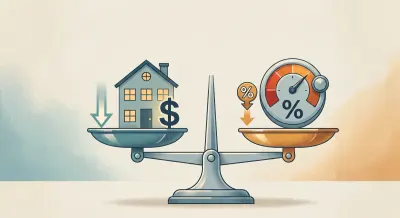
Houston has more than twice as many sellers as buyers and mortgage rates above 7%, so the price you set on day one matters more than any cut you make later.
Price your home where the most recent comparable sales and the homes you’re competing against today say it belongs, and get it there on day one. In Greater Houston, buyers have enough choices that a home priced even a little high gets skipped, and a home that sits costs its owner in monthly bills and, often, in the final price.
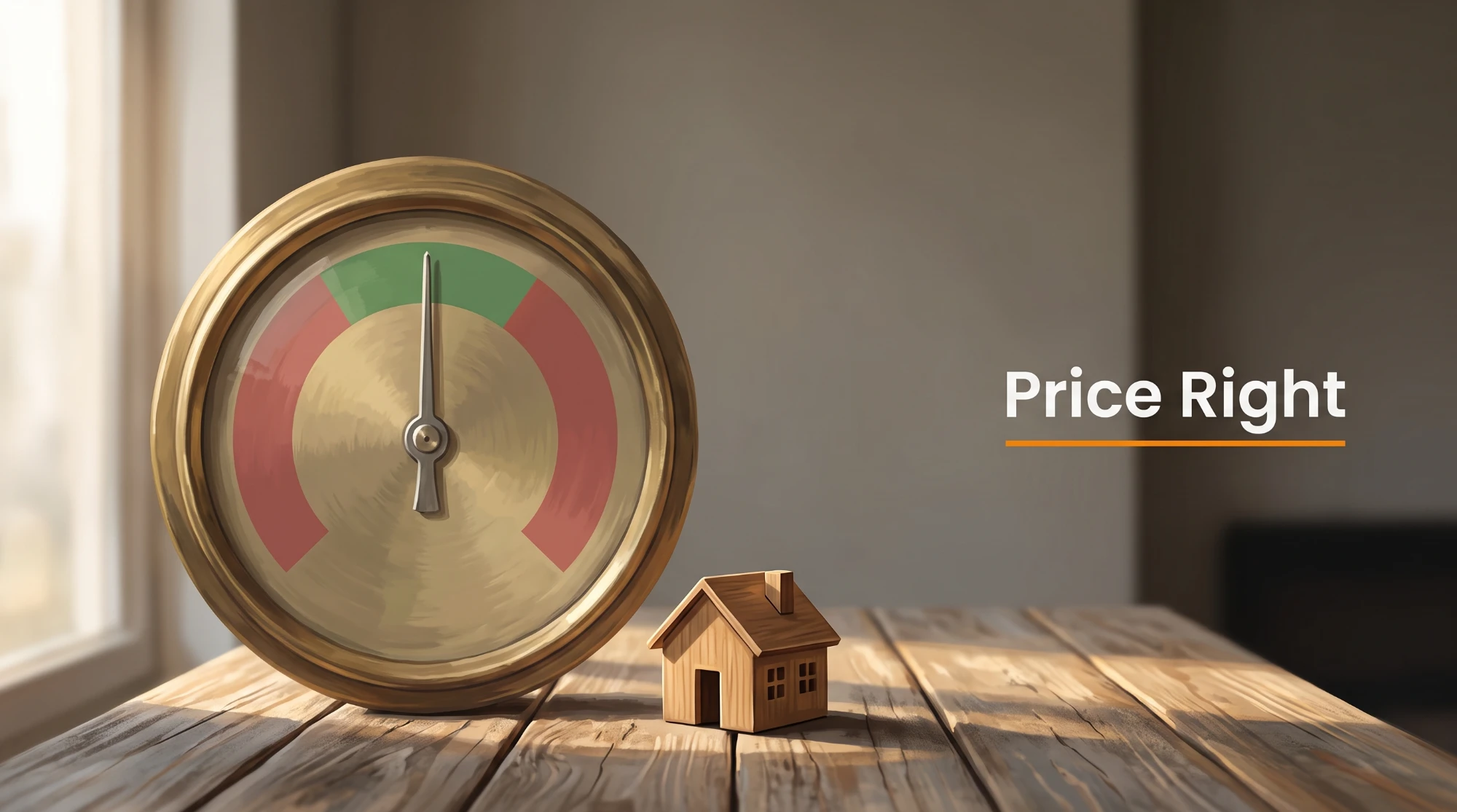
“I think you always need to be in the sweet spot, no matter what,” said Jimmy Simien, Broker/Owner of Simien Properties, on a recent episode of our Ask Jimmy (opens in a new tab) series. We use that term for the price range where a buyer comparing your home with everything else they can tour that weekend sees yours as the fair deal. Our explainer on why so many homes are sitting unsold in Houston covers how sellers and buyers ended up so far apart on price.
Is Houston a Buyer’s Market Right Now?
Yes, by Redfin’s measure, which ranks Houston among the three strongest buyer’s markets of the major U.S. metros it tracks. Four figures set the scene:
- Home sellers compared with buyers in Houston: 134.6% more sellers than buyers in September, according to Redfin’s October 14, 2026 report
- Months of supply in Greater Houston in September: 5.5, up from 5.1 a year ago, according to the Houston Association of REALTORS’ September update, released October 14, 2026
- Average days on market in Greater Houston in September: 58, up from 56 a year ago, according to HAR
- Average 30-year fixed mortgage rate: 7.40% as of October 15, 2026, up from 6.27% a year earlier, according to Freddie Mac
HAR’s chair points to stable prices and a broad selection of homes. Redfin’s measure is narrower, counting sellers against active buyers, and by that count there are more than two sellers for every buyer, each paying about a point more to borrow than a year ago.
Are Homes Still Selling Fast in Clear Lake?
Some are, and the gap between those homes and the rest is the clearest pricing lesson in our own market. Redfin’s Clear Lake housing market page shows this for data through September 2026:
- Median sale price: $349,902, up 11.1% year over year
- Median days on market: 31, down from 37 a year ago
- Sale-to-list price: 97.8%
- Homes with a price drop: 41.8%
A well-priced home here still sells in about a month, close to asking, and Redfin says the most sought-after ones go pending in around 9 days. More than two in five of the homes for sale have still had a price drop. Redfin’s median isn’t measured the same way as HAR’s metro average, so don’t compare the two directly.
Jimmy describes a 1970s home on a half acre in one of Clear Lake’s established neighborhoods: “It sold the first day. We had four showings in the first two hours.” In another Clear Lake neighborhood that traditionally moves fast, he counted eight or nine homes for sale and two pending the night before the episode, while one we listed there sold before it reached the market. Our guide to the best neighborhoods in Clear Lake City compares them by price, schools, and flood risk.
What Counts as a Good Comparable Sale?
A good comp is a recently closed sale of a home a buyer would have considered in place of yours. It’s also how the appraiser on a financed sale will test your price. We look for:
- At least three closed comparable sales
- Sales that closed within the last six months, reaching further back only for a one-of-a-kind home with few or no recent comps
- Homes similar in site, room count, finished area, style, and condition
- Sales from the same market area, and from the same subdivision when possible
- Attention to FEMA flood zone when choosing them
That follows Fannie Mae’s Selling Guide, which governs appraisals on loans sold to Fannie Mae, with one difference: Fannie Mae allows sales from the last 12 months, choosing the most appropriate ones over simply the newest. We start with the most recent closed sales, usually the last three to six months, and weight the newest most. Jimmy’s point on the episode is that six months of trailing comps can look right on paper while the market underneath them has changed, which is why the comps get checked against what’s listed today. Fannie Mae also lets appraisers use current listings as supporting data. For a seller, those listings are the competition.
How Do You Find the Sweet Spot for Your Price?
Start with the comps, then test them against what’s happening to similar listings this month. That second part comes from the listings themselves: “we’re seeing the number of showings on similar listings. We’re seeing how long things are on the market. We’re seeing the feedback,” Jimmy says. The question he asks sellers to answer honestly is why a buyer would pick their house over the neighbor’s. Location and condition answer part of it, and our guide on location, condition, or price weighs the three.
Condition weighs more than it did. Jimmy hears buyers say, “I want to buy a house that I don’t have to go spend $30,000 on because I don’t have that extra 30,000.” A home that needs work has to be priced for the work, and our guide to which improvements are worth doing before you sell covers what to fix first.
New homes are part of the comparison too. Jimmy points to a newer home we had listed off Highway 288, still sitting at the time of the episode because it was competing with new construction, and Zillow’s September 29, 2026 analysis shows how much of that there is:
- New construction’s share of Houston home sales, 12 months ending July 2026: 30.7%, up from about 24% in 2019
- Median price per square foot in Houston, July 2026: $164 for new homes, against $161 for existing homes
The hardest part is usually setting aside what you paid and what you hoped to clear, because neither figure enters a buyer’s math.
Should You Price High to Leave Room to Negotiate?
Not in this market, because buyers with this many choices tend to skip an overpriced home before they negotiate on it. Some sellers assume an interested buyer will simply offer less. “No, they’ll just go to the next house because buyers right now have so many options,” he says.
Three more reasons point the same way:
- Time works against the price. An older national Zillow Research study found that homes selling almost immediately closed about 1% under list, while homes on the market about two months closed about 5% under. It shows a pattern, not a cause, but it matches what we see.
- The appraisal uses closed sales. A price above what the comps support can stall even after you accept an offer, because a financed buyer’s lender will usually order an appraisal built on them.
- Pricing low to start a bidding war isn’t a dependable plan here either. In Zillow’s April 23, 2026 analysis, 7.5% of Houston homes that sold in February closed above list price. The aim is the market price, not a number on either side of it.
How Much Does Overpricing a Home Cost?
It depends on how far over the market you list, when you list, and what the house costs you each month, and the bill has three parts: a lower likely offer, the monthly costs that keep running, and the return your sale proceeds aren’t earning. Even a paid-off, vacant home isn’t free to hold. “It’s a non-revenue generating asset. It is costing you money, even if you own it outright. It’s costing you insurance. It’s costing you upkeep and it’s costing you opportunity cost,” Jimmy says.
We built the Home Pricing Check calculator (opens in a new tab) to put your own numbers on that. It asks 7 to 10 questions, depending on whether you still have a mortgage, and then it:
- Compares your list price with what similar homes have sold for recently and shows how far over or under the market you are
- Estimates how long a likely offer takes at your price against pricing at market value, adjusted for the season you plan to list
- Estimates your likely sale price after that wait
- Adds up what the home costs each month it sits, including taxes, insurance and upkeep on a home with no mortgage
- Counts what your proceeds would be doing if the home had sold, whether that’s paying off debt, going toward your next home, or sitting in savings
- Shows your price next to alternative list prices worked out the same way, and lets you try each one
The results are estimates from your answers and from Houston-area and national research, with the sources listed in the tool. It isn’t an appraisal, it leaves out commissions and closing costs, and there’s nothing to sign up for. It also doesn’t assume every cushion loses. In its model a small one can come out ahead, and the cost grows as the gap widens.
When you finish, you can download a PDF report built from your own answers. It shows your price next to the alternatives, works out every calculation step by step, and lists every assumption on the last page. It’s yours to keep and to hand to your agent, so the pricing conversation starts from numbers you can both check.
The Bottom Line
Set your price from the most recent closed sales and today’s competition, and list in the sweet spot on day one. In Greater Houston, sellers outnumber buyers by more than two to one, and the homes that sell quickly are the ones buyers see as fairly priced against everything else on the market. A cushion above the market tends to cost more than it returns, and the further above, the more it costs. If your home is already listed and not moving, our guide on when to reduce the price of your home covers the next step.
Not sure where your sweet spot is? You can run your own numbers through the Home Pricing Check (opens in a new tab), download the report, and then let’s talk through your options. Call our no-pressure concierge line at (281) 781-4348 or visit simienproperties.com.
In this series: our explainer on why so many Houston homes are sitting unsold comes first, this guide covers choosing a list price, and our guide to reducing your price covers a listing that isn’t moving. Both are linked above.
References
- Houston Association of REALTORS, September 2026 Housing Market Update, released October 14, 2026
- Redfin, Home Sellers Now Outnumber Buyers By 63%, the Biggest Gap Since the Post-Recession Housing Crash, published October 14, 2026
- Redfin, Clear Lake, Houston Housing Market, data through September 2026, accessed October 15, 2026
- Freddie Mac, Primary Mortgage Market Survey, weekly average as of October 15, 2026
- Fannie Mae Selling Guide, B4-1.3-08, Comparable Sales, version dated June 4, 2025
- Zillow, New homes now cost less than existing ones in one-third of major markets, published September 29, 2026
- Zillow, Gone in 7 days: One-third of homes sell within a week in the fastest markets, while others sit, published April 23, 2026 (February 2026 sales)
- Zillow Research, The Price of Overpricing: How Listing Price Impacts Time on Market, national study, published May 24, 2016
- Simien Properties, Home Pricing Check (opens in a new tab), tool description, research current as of September 2026
- Simien Properties, “Ask Jimmy: Pricing Your Home in a Buyer’s Market: Start in the Sweet Spot,” September 2, 2026, audio (opens in a new tab)
Get local guidance before you decide. Call our no-pressure concierge line at (281) 781-4348 or visit simienproperties.com.