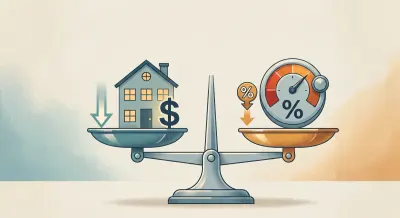

Our rule of thumb is two weeks of showings, and in a market with more than two sellers for every buyer, waiting three months to act tends to cost more than acting early.
Our rule of thumb is two weeks: if the showings or the offers aren’t coming by then, it’s time to look at the price, well before the three-month mark. In Greater Houston, buyers have enough choices that waiting tends to work against a listing, and the homes that sell are the ones that respond to what the market is telling them.
“Don’t be stubborn about price movement,” said Jimmy Simien, Broker/Owner of Simien Properties, on a recent episode of our Ask Jimmy (opens in a new tab) series. Our guide on how to price your home to sell in Houston covers finding the right price before you list. This one is for a home that’s already on the market, and our explainer on why so many homes are sitting unsold in Houston covers the market behind both.
How Long Are Houston Homes Taking to Sell?
About 58 days on average across Greater Houston, with a median of about a month in Clear Lake. The sources measure it differently, so read each on its own:
- Greater Houston average days on market in September 2026: 58, up from 56 a year ago, according to the Houston Association of REALTORS’ September update, released October 14, 2026
- Clear Lake median days on market, data through September 2026: 31, down from 37 a year ago, according to Redfin
- Clear Lake homes for sale with a price drop, data through September 2026: 41.8%, according to Redfin
- Home sellers compared with buyers in Houston: 134.6% more sellers than buyers in September, according to Redfin’s October 14, 2026 report
- Houston home sales under contract in July that fell through: 19.6%, the second-highest share among the large metros in Redfin’s August 21, 2026 report
The days figures count homes that sold, and the ones still sitting look different. The Texas Real Estate Research Center’s September 18, 2026 statewide report shows the gap:
- Texas homes that sold in July: an average of 63 days on the market
- Texas homes still unsold at the end of July: listed an average of 92 days
If your listing is past your area’s typical pace with no offer, the market has already given you its answer.
How Do You Know If Your Home Is Overpriced?
The first two weeks of showings will tell you. Jimmy uses a simple test on the episode. If a home has had one showing in two weeks, he says, there’s an issue. If it’s had ten showings and no offers, there’s still an issue, a different one: “there’s something incongruent between pricing, pictures and what they saw when they got there.”
His example is a home listed at $400,000 that draws ten showings in 15 days and no offers, which suggests it may have been a $375,000 house. We read the first two weeks this way:
| What you’re seeing | What it usually means | What to do |
|---|---|---|
| Few or no showings | Buyers are ruling the home out online, usually on price | Adjust the price now |
| Steady showings, no offers | The price drew people in, and the home didn’t match it in person | Fix what the feedback points to, or bring the price in line with the home |
| Showings and low offers | You’re close, and buyers are testing you | Counter, and watch the buyer’s next number |
The first two rows come from Jimmy’s test, and the reading of each is ours. Your agent can see the feedback buyers leave after a showing, and so can you. That feedback is what to act on.
When Should You Reduce Your Asking Price?
By our rule of thumb, at about two weeks, when the pattern above is clear. Sellers often worry that an early reduction looks desperate. Jimmy’s answer: “No, it shows you’re in tune with the market, and you’re being smart about it, and you’re going to sell your house while everybody else is sitting on theirs.”
Waiting has a second cost. In our experience, a large cut at 90 days makes buyers wonder what else is wrong with the house, so the reduction that would have worked early has to be bigger late.
The calendar plays a part, though less than the plan does, as our guide on whether seasonality still matters in Houston explains. Jimmy’s advice heading into the fourth quarter is to “get ahead of it. Don’t be behind it.”
How Much Should You Reduce the Price?
Enough to put your home ahead of the listings it’s competing with, in one move if you can. Jimmy describes the goal as to “get sellers in front of everybody else in their neighborhood” when it’s time to reduce.
For a sense of scale, the median price cut among Texas sellers in July was $13,000, or 3.6% of the original list price, according to the Texas Real Estate Research Center’s September 18, 2026 statewide report. That’s a statewide median from earlier in the year, not a target for your home. The right number comes from the closed sales and current listings around you.
We’ve lost a listing over this. The home was about four years old, roughly 1,400 square feet, owned outright, and listed at $295,000, which is more than $200 a square foot. The first reduction didn’t come for three months, after our agent had recommended a lower number, and we eventually lost the listing. Jimmy expects it to come back on the market at a lower price. “You don’t want to be chasing the market down,” he says.
What Does Waiting for a Better Offer Cost?
Every month the home sits, it costs you its carrying costs and the use of the money tied up in it, whether or not you have a mortgage. Waiting for the market to improve is its own bet. To sellers holding out, Jimmy says, “that crystal ball doesn’t exist.” Our guide on how waiting to act can cost Houston buyers and sellers covers the planning side of that decision.
You can put your own numbers on the wait. Our Home Pricing Check (opens in a new tab) estimates the time to a likely offer, the likely sale price, and the monthly cost of holding the home at your current price, then shows alternative list prices you can try. When you finish, you can download a PDF report with every calculation and assumption to go over with your agent. The results are estimates, not an appraisal.
How Should You Respond to a Low Offer?
Counter it. Jimmy says we’re seeing buyers open with low numbers, and he tells sellers not to reject every one of them: “make your first counter, extend the olive branch, and let’s see where the buyer goes after that.” The buyer’s second number tells you whether there’s a deal to be made.
Price isn’t the only thing you can move. Our guide on whether a rate buydown beats a price reduction explains how a seller credit toward the buyer’s rate can lower their payment more than the same dollars off the price, at about the same net to you.
An accepted offer isn’t a closing, either. With nearly one in five Houston contracts falling through in July, how you handle the repair request matters too, and we cover it in why home sales fall through after the inspection in Houston.
A listing that’s been sitting four or five months, Jimmy says, is when “the sharks are out lowballing you.”
The Bottom Line
By our rule of thumb, if two weeks pass without showings or offers, adjust the price then, and make the move large enough to matter. In Greater Houston, homes that sell do it in weeks, and the ones that wait tend to sit longer. Jimmy’s advice is to stay open to a reduction “not because it’s a fire sale, but because you have the data.”
Not sure whether it’s the price or something else? Let’s talk through your options. Call our no-pressure concierge line at (281) 781-4348 or visit simienproperties.com.
In this series: our explainer on why so many Houston homes are sitting unsold comes first, our guide to pricing your home covers choosing a list price, and this guide covers a listing that isn’t moving. Both are linked above.
References
- Houston Association of REALTORS, September 2026 Housing Market Update, released October 14, 2026
- Redfin, Home Sellers Now Outnumber Buyers By 63%, the Biggest Gap Since the Post-Recession Housing Crash, published October 14, 2026
- Redfin, With Buyers Firmly in the Driver’s Seat, Home-Purchase Cancellations Hit Highest Level in Nearly 3 Years, published August 21, 2026
- Redfin, Clear Lake, Houston Housing Market, data through September 2026, accessed October 15, 2026
- Texas Real Estate Research Center at Texas A&M University, Texas Housing Insight, September 2026, published September 18, 2026 (statewide data for July 2026)
- Simien Properties, Home Pricing Check (opens in a new tab), tool description, research current as of September 2026
- Simien Properties, “Ask Jimmy: Pricing Your Home in a Buyer’s Market: Start in the Sweet Spot,” September 2, 2026, audio (opens in a new tab)
Get local guidance before you decide. Call our no-pressure concierge line at (281) 781-4348 or visit simienproperties.com.